Serum, Cream or Balm: Choosing a Texture That Fits
Choose a serum, cream or balm by how it spreads, settles and fits your routine, so the texture feels comfortable and suits the job you want it to do.
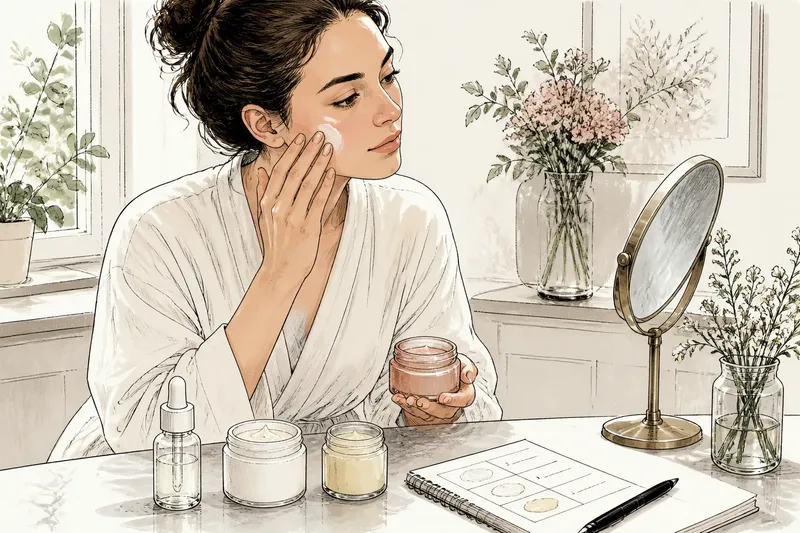
You smooth on a serum, reach for cream, then find a balm too heavy by midday. Choosing a serum, cream or balm gets easier when you judge the texture by its feel, application and the role you want it to play—not by the name on the jar.
Why does a product feel wrong after application?
A texture can feel pleasant at first and distracting later. A serum may leave a tacky finish, a cream may feel too rich under makeup, or a balm may stay noticeable on the skin. These reactions can come from the formula, the amount used, the layer beneath it or the order of application.
Start by noticing when the discomfort appears. If a product feels sticky as soon as you spread it, the finish may simply not suit your preference. If it starts out comfortable but pills when you add another product, layering is a more likely cause. If a balm feels fine on a dry patch but bothers you across the whole face, its concentrated, coating feel may be useful only in a smaller area.
Try one adjustment at a time. Use less, apply to a different area, or change the order of compatible products. Changing several things at once makes it harder to tell what helped. If irritation, swelling or persistent discomfort occurs, stop using the product and seek qualified medical advice when appropriate; a texture preference is different from a possible reaction.
What role should the texture play?
Think of format as an application choice rather than a promise about results. A serum is often easy to spread in a thin layer and can suit someone who dislikes a substantial coating. Cream generally offers a more familiar, cushiony feel and can be easier to distribute over a broader area. Balm tends to be thicker and more occlusive in feel, so it can work as a small, targeted layer when you want a product to remain present on the surface.
Those are broad tendencies, not fixed rules. A serum can feel rich, a cream can be light, and a balm can soften as you warm it between your fingers. Read the product’s directions and consider its stated purpose; the format alone cannot tell you what is inside or what it is intended to do.
Ask yourself what you want to notice during application. Do you want a fluid layer that spreads quickly? A product with enough body to massage over a larger area? Or a thick texture that stays where you place it? Those answers are more useful than choosing based on whichever format sounds most advanced.
Why does serum feel tacky or disappear too quickly?
A serum’s light, fluid feel can be an advantage when you want a thin layer, but it may also feel sticky or seem to vanish before you finish applying it. A formula that dries down quickly, a generous amount, or a dry surface can make spreading feel awkward. The product may also be designed to sit beneath another layer rather than serve as the final step.
Try using a smaller amount and spreading it in sections instead of dispensing more whenever the surface feels dry. Follow the label for application and layering. If the serum remains tacky in a way you dislike, a cream on top may make the routine feel more comfortable; if that pairing pills, allow the first layer to settle or simplify the combination.
Say you apply a fluid serum across your cheeks and notice it becomes sticky before you reach your forehead. In that invented situation, you could try a smaller amount on one cheek, spread it promptly, then compare the feel after the product has settled. The observable result to look for is whether application feels smoother and the finish is more comfortable—not whether the product delivers a particular effect.
Why does cream feel greasy or roll under makeup?
Cream has more body than a typical fluid serum, which can make it easier to control but also more noticeable on the skin. A rich cream may feel greasy if you prefer a barely-there finish. Makeup can roll or form little flakes when layers have not settled, when too much product is used, or when the formulas do not sit well together.
Begin with less cream than you think you need and spread it evenly. Give it time to settle before applying makeup, then use gentle pressing motions rather than repeatedly rubbing over the same area. If pilling continues, try the cream without another layer beneath it, or reserve it for a time when you do not need makeup. That helps isolate the source without requiring a new product.
Do not chase a perfectly weightless feel if the cream is meant to provide a richer finish and that finish suits you. Instead, decide whether the sensation is comfortable in the context of your routine. A cream that feels pleasant at night may not be your choice under daytime makeup, and that is a practical distinction, not a flaw in either format.
Why does balm feel waxy, sticky or too heavy?
Balm usually has more structure than serum or cream, so it may take warmth and pressure to spread. A waxy or coated sensation is part of what some people want from this format, but it can feel cumbersome over a large area. Applying a thick layer everywhere when you only want a focused coating can make the product seem harder to live with.
Use a small amount and warm it between clean fingertips if the directions allow. Place it only where that richer feel has a purpose, then press or smooth it gently rather than dragging a thick layer across the skin. If the texture still feels sticky or uncomfortable, choose a lighter format for that part of your routine instead of trying to force the balm to behave like a serum.
It is not worth spending time trying to make every product disappear completely. Some textures are designed to remain perceptible, and repeated rubbing can make application more frustrating without changing the finish in a useful way.
How can you compare textures without changing everything?
Keep the comparison narrow. Choose one area and one point in your routine, then observe how the product spreads, settles and feels after you apply it. Do not introduce several new products at once; otherwise, a change in comfort may be hard to connect to a specific texture.
- Notice the starting feel: Is it fluid, creamy, or firm enough to pick up with a fingertip?
- Check how it spreads: Does it glide easily, need more effort, or drag on the surface?
- Observe the finish: Does it feel tacky, cushiony, slick, waxy, or barely noticeable?
- Try it with your usual next layer: Does the combination stay comfortable, or does it pill or feel crowded?
- Decide where it belongs: Does it suit a broad area, a smaller spot, a makeup routine, or a time when you want a more substantial feel?
Keep notes in plain language if you are comparing products: “spreads quickly,” “too sticky under makeup,” or “comfortable on one dry-feeling area” is enough. You do not need a rating system. The aim is to identify a texture you are willing to use in the setting that matters to you.
Which texture should you choose for your routine?
Choose serum if you prefer a fluid, thin layer and want an easy-to-spread format. Choose cream if you want more body and a finish that feels cushiony or substantial. Choose balm if you want a thicker, more focused coating and are comfortable with a product that may remain noticeable.
Those preferences can change from one part of the routine to another. You might prefer a serum under makeup and a cream at another time, or use balm only on a small area. There is no need to treat the formats as competing categories; the useful question is whether a product’s feel fits the job you have in mind.
If you are choosing among products, follow the label and manufacturer’s directions, especially for where and how to apply them. A product’s name does not replace its instructions, and local requirements may affect labeling. Keep the decision simple: for serum, cream or balm, choose the texture whose application and finish you can comfortably make part of your routine.