Packing a Personal-Care Routine for One Night Away
Packing a personal-care routine for one night away is easier when you choose a compact, familiar setup and check containers before leaving.
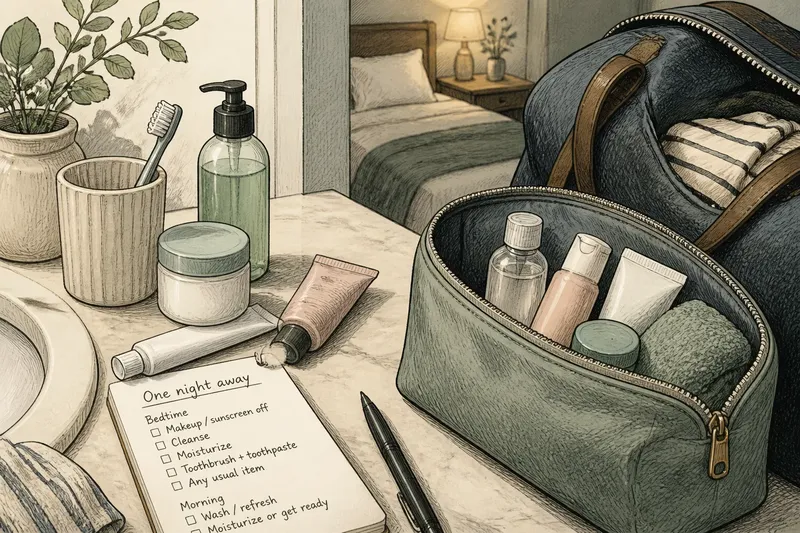
You are closing an overnight bag when you spot your cleanser, moisturizer, toothbrush, and a half-used tube of hand cream on the bathroom counter. Packing a personal-care routine for one night away does not require a miniature version of every shelf; it calls for a choice about what you will actually use, what can travel safely, and what can stay home.
There are three sensible approaches: bring familiar full-size products, decant a few into travel containers, or use a hybrid kit that combines personal staples with items available at your destination. Each suits a different kind of trip and tolerance for packing. Start with the night and morning you expect to have, then choose the lightest option that covers those moments without forcing you to experiment with unfamiliar products.
What does one night away actually call for?
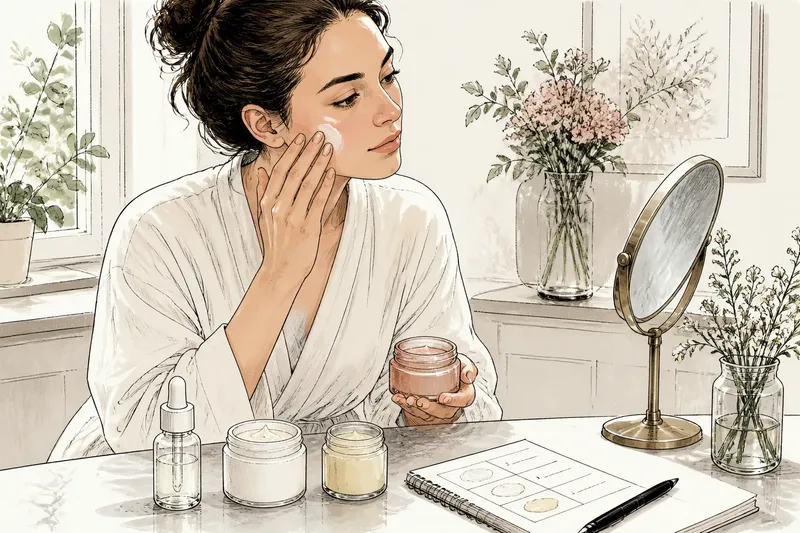
Think in moments, not in product categories. You may want to remove makeup or sunscreen, wash your face, moisturize, brush your teeth, and use any personal-care item that is part of your ordinary bedtime routine. In the morning, consider whether you will wash your face, apply a usual product, or simply get ready and leave.
Write those moments on a note or in your phone before pulling products from the cabinet. A short list keeps “maybe” items from multiplying. If you do not expect to use a product at home on an ordinary night, do not pack it just because the trip feels like a special occasion.
Keep the routine familiar. A night away is a poor time to try a sample that may feel different on your skin, introduce a new treatment, or bring a complicated sequence you rarely follow. If a product is part of regular care, include it; if it is an optional extra, ask whether skipping it for one night would meaningfully disrupt your routine.
Should you bring full-size products, decant, or use a hybrid kit?
When do full-size products make sense?
Bring the original container when the product is already compact, difficult to transfer, or used in a way that makes a separate pot awkward. A small tube of face cream, a stick deodorant, or a familiar toothpaste may be easier to pack as-is than to portion out. Full-size products also suit a trip where you want to avoid transferring or handling a formula.
The trade-off is space and the chance of a lid loosening among clothes. Put any leak-prone container in a sealable bag, and keep it upright when you can. Do not pack a large bottle simply because it is closest to hand if a smaller, familiar option would do the same job.
Who benefits from decanting a few products?
Decanting can suit someone who travels with a consistent routine and wants to carry only the amount needed for the stay. Use clean, purpose-made travel containers with closures that fit securely; label them with the product name so cleanser and moisturizer do not become an unidentified pair. Keep products in their original packaging when the packaging is needed for safe use or clear identification.
Do not transfer a product into a container that is dirty, damaged, or not intended for that kind of product. Some formulas are sensitive to air, light, or contact with other materials, and a jar may be less suitable than a squeeze bottle. Check the product label and container maker’s instructions before transferring anything; if those directions are unclear, pack the original instead.
When is a hybrid kit the easiest choice?
A hybrid kit pairs a few products from home with suitable basics provided where you are staying or easily available there. It can work well when you know what the accommodation supplies and are comfortable using it. Bring your own cleanser or moisturizer if those are the parts of the routine you prefer to keep consistent, and leave routine basics behind only when you are comfortable with the alternative.
Do not assume that a room will have a particular item. Check the booking information or ask the host if the detail affects what you pack. If the answer is uncertain, a small familiar backup is usually less cumbersome than a full duplicate set.
How can you choose the right approach for your trip?
Match the option to your priorities rather than aiming for the smallest possible bag. Use this quick comparison:
- Choose full-size essentials if the products are already compact, transferring them would be inconvenient, or you prefer to keep the formula in its original packaging.
- Choose decanted essentials if you know your routine well, have suitable clean containers, and want to reduce the amount of product you carry.
- Choose a hybrid kit if you can confirm that basic supplies will be available and want to bring only the products you strongly prefer to use yourself.
- Choose the simplest option you trust if the trip involves a late arrival, an early departure, or little time to unpack and repack.
Say you are staying one night with a friend and arrive after dinner. You normally use the same cleanser and moisturizer, but your toothbrush is already in a compact case and your usual toothpaste tube is small. You could pack the cleanser and moisturizer in their original containers, place them in a sealable pouch, and bring the toothbrush and toothpaste; leave the optional face mask at home. The expected result is a familiar bedtime and morning routine without extra products to sort through.
For a different kind of trip, imagine you are staying somewhere that confirms it provides basic soap but not your preferred face products. A hybrid kit could mean bringing your cleanser and moisturizer while relying on the provided soap only if it suits your needs. If it does not, pack a familiar alternative rather than making the trip a test of a new product.
What should you check before the bag is zipped?
Do a quick container and use check at the sink. The goal is to catch a missing essential or a messy lid, not to inspect every item you own.
- Match each product to a moment. Check that every item on your short list has a clear use at bedtime or in the morning; remove anything with no planned use.
- Check the closure. Make sure each cap, pump, or lid is firmly shut and not cracked or cross-threaded.
- Check the amount. Bring enough for the planned routine, but avoid carrying a large container when a familiar smaller one is available.
- Check the label. Confirm that you can identify the product, especially if it is in a travel container.
- Check the pouch. Put liquids or creams that could soil clothing inside a separate sealable bag or washable toiletry pouch.
- Check what the destination supplies. Confirm any item you intend to leave behind rather than assuming it will be there.
- Check the return plan. Keep small containers and their caps together so you can bring them home without leaving pieces behind.
For travel by air, check the current rules that apply to your route and luggage before packing liquids. Requirements can differ by location and may change, so do not rely on a container size or packing method remembered from another trip. Keep products accessible if you expect to remove them during screening.
What is not worth packing for a single night?
It is usually not worth bringing a duplicate of every product, a new treatment you have not tried, or an assortment of samples with no planned use. A second moisturizer “just in case” can create more decisions than it solves. The same goes for elaborate tools that take time to set up when your usual routine does not depend on them.
Skip the urge to decant every product simply to make the kit look uniform. Transfer only what makes the bag more manageable, and leave products in their original packaging when that is clearer or more suitable. A practical kit can be a mixture of sizes and containers; it does not need to match.
What do people ask about an overnight routine?
Can I skip part of my usual routine for one night?
For many ordinary optional steps, a short pause may be simpler than packing a product you rarely use. Keep any routine that is important for your personal needs, and ask a qualified professional if you have been told to follow a specific care plan.
Should I pack a new beauty sample for the trip?
It is generally more comfortable to use familiar products when you have little time to respond to an unexpected reaction or change in feel. Save new samples for a time when you can try them without making them part of a rushed overnight routine.
How do I keep a toiletry bag from leaking?
Close containers carefully, separate products that could soil fabric in a sealable pouch, and avoid packing a container with a damaged cap. If a product is prone to leaking or difficult to close, carry it in its original packaging only if that packaging is intact and secure.
What if I am not sure what the accommodation provides?
Check the listing or ask the host if the answer would change your packing choice. If you cannot confirm, bring a compact familiar essential rather than counting on an item you may not find.
When you pack a personal-care routine for one night away, make the final choice by asking one simple question: will this item help me carry out a familiar part of the night or morning? If yes, pack it in a container you can identify and close; if no, leave it on the shelf. That small decision keeps the kit useful without turning one overnight stay into a second bathroom cabinet.